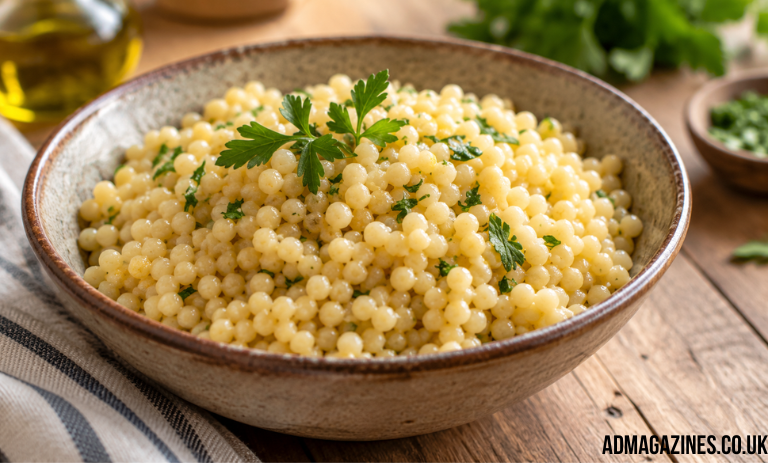
Kouskousi is a food name that can lead to some confusion because it does not always describe exactly the same product. Depending on the source, region, spelling and culinary tradition, the term may point towards a small Greek pasta or be connected with the better-known North African food called couscous. Both are wheat-based foods made in very small pieces, which helps explain why their names and appearances are sometimes mixed together.
The distinction matters in the kitchen. Traditional couscous is normally produced by working semolina into small granules and has a long history in North African food culture. Greek kouskousaki, meanwhile, is recognised as a type of pasta and is normally cooked in liquid much like other small pasta shapes. Visit Greece includes kouskousaki among traditional Greek pastas alongside chylopites, kritharaki and trachanas.
For that reason, kouskousi is better understood through its culinary context rather than by assuming every product carrying a similar name is identical. Its ingredients, cooking instructions and place of origin are often the best clues to what is actually being served.
What Is Kouskousi?
In practical terms, kouskousi usually refers to a very small wheat-based food with a rounded or grain-like shape. In Greek food discussions, the closely related name kouskousaki describes a traditional pasta. Greek pasta manufacturer Misko describes its kouskousaki as small round pieces made from durum wheat.
Its appearance can make it easy to mistake for couscous, particularly when it is dry. Both products may look like tiny golden beads sitting in a bag or bowl. Once cooked, however, their texture and preparation can reveal important differences.
Greek-style kouskousaki is generally approached as pasta. It can be boiled, simmered in broth or added directly to dishes where it absorbs cooking liquid. This gives it many of the same practical uses as other small pastas.
Traditional North African couscous follows a different production and preparation tradition. UNESCO describes couscous-making as a process in which cereal is ground into semolina, rolled into small particles and traditionally steamed.
So, although the words and foods may be related in appearance, a cook should not assume that a Greek pasta labelled with a similar name will behave exactly like packaged couscous.
The Greek Connection
The Greek form of this small pasta belongs to a wider tradition of homemade dried pasta. Greece has many regional pasta shapes that were historically prepared from available agricultural ingredients and stored for later use.
Official Greek tourism material lists kouskousaki as a traditional Greek pasta, along with several other familiar regional varieties. It also notes that homemade pasta was traditionally prepared after the cereal harvest, when wheat, milk and eggs were readily available in rural households.
This background helps explain why small dried pasta had a practical role beyond taste. Rural families needed foods that could make use of seasonal ingredients, remain stable during storage and provide the basis for filling meals later in the year.
Recipes and manufacturing methods can vary. Some products are based mainly on durum wheat, while more traditional homemade pasta recipes may include ingredients such as milk or eggs. This means consumers should read the ingredient list rather than expecting every kouskousaki product to have an identical recipe.
Its compact shape makes it especially practical for a wide range of dishes. It can be distributed evenly through soups and casseroles and can absorb liquid without requiring large pieces of pasta. That makes it suitable for everyday meals where broth, tomato sauce, vegetables or meat provide most of the flavour.
Kouskousi and North African Couscous
The similarity between kouskousi and couscous is more than visual, but the two should still be distinguished carefully.
Couscous is closely associated with the Maghreb and wider North African food culture. In 2020, UNESCO added the knowledge and practices connected with the production and consumption of couscous to its Representative List of the Intangible Cultural Heritage of Humanity. Algeria, Mauritania, Morocco, and Tunisia worked together to submit the nomination.
Traditional couscous begins with cereal that is processed into semolina. The semolina is then worked into granules. Historically, steaming plays a central part in cooking it.
The finished couscous may be served with vegetables, meat, legumes or broth, but recipes vary considerably from place to place. UNESCO notes that the food changes according to region, environment, season and occasion.
Greek kouskousaki, in comparison, belongs to the pasta family. A Greek culinary source describes it as a small pasta ball that expands slightly during boiling and specifically distinguishes it from traditional Tunisian couscous.
That cooking difference is probably the easiest way for an everyday cook to understand the distinction: one is normally treated like small pasta, while traditional couscous is based on formed semolina granules and a steaming tradition.
Why the Names Are So Easy to Confuse
Food terminology often changes as recipes travel across languages, borders and generations. A familiar name may be adapted into local spelling, pronunciation or usage without referring to exactly the same preparation.
Kouskousi is a good example of this problem.
Someone searching for the term online may encounter descriptions of Greek pasta on one page and North African couscous on another. This does not necessarily mean that one description is deliberately incorrect. It can reflect different regional meanings, spelling choices or attempts to translate closely related food names into English.
The strongest documented Greek term is kouskousaki, written κουσκουσάκι in Greek. It is identified by Greek tourism material and Greek pasta producers as pasta.
Couscous, meanwhile, has its own well-established culinary identity in North Africa.
For consumers, the safest approach is therefore simple: look beyond the name.
Check where the food was produced, examine its ingredients and read the cooking directions. A product that requires boiling like pasta should be prepared according to those instructions rather than treated as instant couscous.
What Does Kouskousi Taste Like?
Kouskousi itself generally has a mild wheat flavour. It is not the kind of ingredient that dominates a meal by itself. Instead, much of its appeal comes from its ability to work with sauces, stocks, vegetables, meat and other ingredients.
Its small size creates plenty of surface contact with cooking liquid. When simmered in stock or sauce, the pieces can pick up the surrounding flavours.
The texture depends heavily on cooking time. When properly cooked, small pasta should be tender while still holding its shape. Leaving it in liquid for too long can make it softer and may cause a soup or stew to become thicker as the pasta continues absorbing moisture.
This behaviour is useful when preparing comforting one-pot meals but also means quantities need to be considered carefully. A relatively small amount of tiny pasta can change the consistency of a pot of broth once it begins swelling.
How Kouskousi Is Usually Cooked
If the product is Greek kouskousaki or another small pasta sold under a similar name, it can normally be cooked using standard pasta principles.
Bring water or stock to a boil, add the pasta and cook according to the package directions. Stirring occasionally helps prevent the small pieces from settling together.
When it is being served as a separate side dish, the pasta can be drained once tender. A little olive oil, cheese, herbs or sauce can then be added.
For soup, it can be placed directly into the cooking liquid. Because the pasta absorbs broth, it is usually best added towards the later part of cooking rather than at the beginning of a long-simmered soup.
A one-pot tomato preparation is another option. Onion and garlic can be softened in olive oil before tomato and stock are added. The small pasta can then simmer directly in the sauce until cooked. Vegetables, herbs, cheese or cooked meat can be included according to preference.
The important point is to follow the instructions for the particular product. Traditional couscous and Greek pasta do not always require the same amount of water or cooking time.
Ways to Use Kouskousi in Everyday Meals
One reason small pasta has remained useful is its flexibility. It can move easily between soups, main dishes, sides and salads.
In a vegetable soup, kouskousi can replace noodles or other small pasta. Carrots, celery, onion, tomato, beans and herbs all work well with its neutral wheat flavour.
It can also be cooked in chicken or vegetable stock and served as a simple side dish. Adding grated cheese and black pepper produces a basic meal without requiring a heavy sauce.
Tomato-based dishes are another natural use. Small pasta can absorb tomato sauce while remaining distributed throughout the dish rather than sitting in large pieces.
Greek culinary material also describes traditional pasta as suitable with seafood, meat, legumes, soups and cold salads, showing that these foods are not limited to a single preparation.
For a cold dish, cooked pasta can be cooled and combined with cucumber, tomato, herbs, olives or cheese. A simple dressing of olive oil and lemon can keep the dish light.
Because the pasta is small, however, it should be cooked carefully before using it in salad. Overcooked pieces may lose their shape after chilling and mixing.
Kouskousi Compared With Orzo
Kouskousi and orzo can perform similar jobs in recipes, but they do not look the same.
Orzo, known in Greek as kritharaki, resembles small grains of rice. Kouskousaki is much rounder and resembles tiny beads. Both are recognised Greek pasta forms.
Their small dimensions mean they work well in soups, baked dishes and meals cooked in broth. In some recipes, one may substitute for the other when exact shape is not important.
However, cooking times and liquid absorption can vary according to size, thickness and manufacturer. Substituting equal quantities without checking the food during cooking can therefore change the final texture.
Kouskousi should also not automatically be replaced with regular couscous. Even though couscous may look similar, its preparation can be quite different.
Nutritional Characteristics
Because most forms are based on wheat or durum wheat semolina, kouskousi is primarily a source of carbohydrates. The exact nutritional content depends on the ingredients and manufacturing process.
A plain durum-wheat version will differ from homemade-style pasta containing milk or eggs. Added ingredients can affect protein, fat and other nutrient values.
The final meal matters as much as the pasta itself. Combining a moderate serving with vegetables, beans, lentils, fish or lean meat can create a more varied plate than eating the pasta alone.
People with coeliac disease or a medical need to avoid gluten should be careful. Standard versions produced from wheat or semolina contain gluten. A gluten-free substitute would need to be made from a different base ingredient and clearly labelled accordingly.
For anyone monitoring nutrition closely, the information printed on the actual package is more useful than a general nutritional estimate because recipes differ between manufacturers.
Buying and Storing Kouskousi
Outside Greece, kouskousi or kouskousaki may not always be stocked by ordinary supermarkets. Greek grocery shops, Mediterranean food retailers and specialist pasta stores are more likely to carry it.
When buying online, product photographs alone may not be enough to identify what is being sold. Small couscous granules and small pasta beads can look very similar.
Look for words such as pasta, Greek pasta, kouskousaki, durum wheat semolina and preparation instructions requiring boiling. These details help distinguish a pasta product from couscous.
Uncooked dried pasta should normally be stored in a cool, dry cupboard in a sealed package or airtight container. Moisture is the main concern once a packet has been opened.
Cooked pasta should be refrigerated promptly in a covered container and used within an appropriate food-safe period. If it has already been mixed with meat, dairy products or sauce, storage should follow the requirements of the complete dish.
A Food Name With More Than One Culinary Connection
Kouskousi shows how complicated a simple food name can become when closely related ingredients appear in different culinary traditions.
Its Greek connection is best represented by kouskousaki, a recognised type of traditional pasta made in small pieces. North African couscous has a separate and much older documented food tradition built around the preparation, rolling and steaming of semolina. Their similar size, wheat base and names make comparison understandable, but they are not automatically interchangeable.
The distinction is useful rather than inconvenient. It allows cooks to appreciate two different ways in which wheat has been transformed into small, practical foods.
Conclusion
Kouskousi is most useful to understand as a term whose exact meaning depends on culinary context. In Greek cooking, the closely documented kouskousaki is a small traditional pasta, typically cooked in water, broth or sauce. In discussions connected with North Africa, the similar name may lead people towards couscous, a traditional semolina food with deep cultural roots across the Maghreb.
The difference becomes clearer when preparation is considered. Greek-style small pasta is normally boiled or simmered, while traditional couscous is formed from semolina granules and historically prepared through steaming.
For anyone buying or cooking kouskousi, the label, ingredients and cooking directions provide the most reliable answer. Rather than treating every small wheat bead as the same food, understanding its regional background makes it easier to prepare correctly and appreciate the food tradition behind it.

