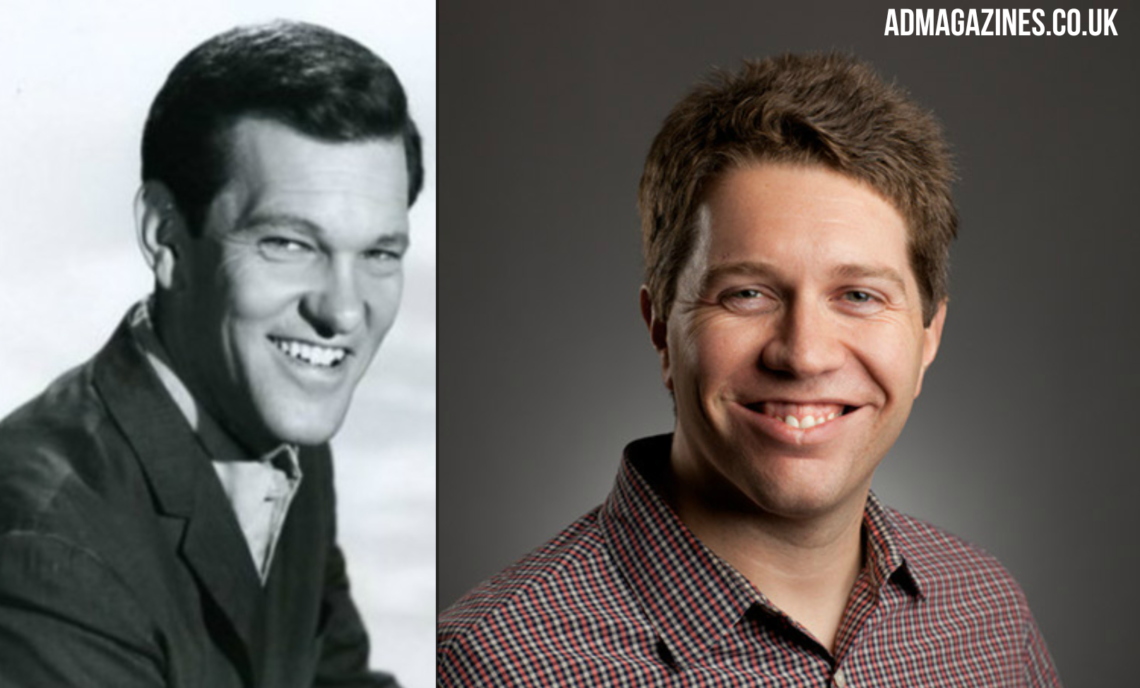
Tom Kennedy and Garrett Camp are two names connected with completely different professional fields. Tom Kennedy built a long career in American television, particularly as a game-show host. Garrett Camp became known through technology, software development and entrepreneurship. Although their names can appear together in online searches, their careers should be understood separately.
Kennedy belonged to an earlier generation of broadcasters who developed their skills through radio before becoming television personalities. Camp entered professional life decades later, when internet businesses and software companies were rapidly expanding. Looking at their backgrounds separately provides a clearer picture of what each man accomplished.
Who Was Tom Kennedy?
Tom Kennedy was an American television presenter whose birth name was James Edward Narz. He was born on February 26, 1927, in Louisville, Kentucky. His career eventually made him a familiar figure to viewers who followed American game shows during the second half of the twentieth century.
Rather than becoming associated with only one successful program, Kennedy worked across many television productions. His career included quiz programs, word games, music-based competitions and other entertainment formats. This variety became one of the defining features of his professional life.
Why James Edward Narz Became Tom Kennedy
The name Tom Kennedy was a professional identity rather than the name he received at birth. His older brother, Jack Narz, was also involved in television and broadcasting. With both brothers working in similar professional circles, using different names helped prevent confusion.
James Narz consequently established himself professionally as Tom Kennedy. The decision gave him an identity independent from his brother and eventually became permanent. Most television audiences came to know him exclusively by the Kennedy name.
His family connection to broadcasting remained significant because both brothers developed substantial careers in the entertainment business.
Kennedy’s Education and Early Broadcasting Experience
Before television became his main profession, Kennedy attended the University of Missouri and the University of Kentucky. During this period, he was already gaining practical experience in broadcasting.
He worked in radio in Columbia, Missouri, and later in Lexington, Kentucky. After moving to Los Angeles, he continued working at radio stations there. These positions gave him experience speaking to audiences, working within scheduled programming and communicating clearly under time pressure.
Radio proved to be useful preparation for television. A presenter needed to think quickly, speak naturally and keep a program moving even when circumstances changed unexpectedly.
Moving Into Television
Kennedy’s early television experience included commercial appearances before game shows became the main focus of his career. During appearances promoting Regal Beer on Ozark Jubilee, he was still using Jim Narz professionally.
His move toward television hosting came as the medium was establishing itself as a major source of American entertainment. Game shows were becoming an important part of television schedules, creating opportunities for presenters capable of handling contestants and structured competitions.
Kennedy gradually found his place within this format. His broadcasting experience helped him communicate instructions clearly without making the programs feel overly formal.
You Don’t Say! and Growing Recognition
One of the most important programs in Kennedy’s career was You Don’t Say!. He hosted the show during its NBC run from 1963 to 1969 and was also associated with its later ABC version in 1975.
The program gave Kennedy sustained national television exposure. A game-show presenter had to do more than introduce contestants and read material. The host was responsible for maintaining the pace of the competition while making sure both participants and viewers could follow what was happening.
Kennedy’s work on the program helped establish the professional reputation that allowed him to move between numerous television projects.
Split Second and Name That Tune
Kennedy continued building his television career through programs including Split Second, which he hosted during the 1970s. The show’s fast-moving nature required a presenter who could communicate quickly without creating confusion.
Another major part of his career came through Name That Tune. The music-centered competition gave Kennedy a different format to manage. Instead of relying solely on conventional questions, the program used songs and musical recognition as central elements of the competition.
Working successfully across these formats demonstrated that Kennedy was not dependent on one particular television concept.
Kennedy’s Period on Password Plus
Kennedy later became the host of Password Plus. He took over hosting responsibilities following the illness of Allen Ludden, who had been strongly identified with the Password franchise.
Joining an established program presented a different challenge from launching a new show. The audience already understood the game and had expectations about how it should feel. Kennedy therefore needed to bring his own presenting abilities while respecting a format viewers already recognized.
He hosted Password Plus between 1980 and 1982, adding another major game-show credit to his career.
A Long List of Television Programs
Kennedy’s television résumé extended considerably beyond his most remembered programs. Over the years, he hosted shows including The Big Game, Dr. I.Q. to shows including Break the Bank, Whew!, 50 Grand Slam, It’s Your Bet, and To Say the Least.
He also presented a syndicated nighttime edition of The Price Is Right. These assignments were spread across different stages of his career, demonstrating how long he remained active in television entertainment.
His repeated selection as a host also reflected the practical demands of the profession. Producers needed someone who could explain a game efficiently, interact comfortably with different personalities and respond when an episode did not unfold exactly as planned.
Tom Kennedy Outside the Host’s Position
Although hosting defined Kennedy’s career, he was not restricted entirely to that role. He appeared as a guest or panelist on other entertainment programs, including Hollywood Squares and To Tell the Truth.
Kennedy also accepted acting appearances. Hosting remained the main focus of Kennedy’s career, though he also spent some time performing in scripted television roles. Acting never replaced hosting as his primary professional identity, but these appearances showed another side of his television work.
He also briefly had a talk program called The Real Tom Kennedy Show.
Retirement and Later Recognition
Kennedy retired from regular television work in 1989 after spending decades in broadcasting. He occasionally returned to public view afterward, including an appearance on Hollywood Squares in 2003 during programming celebrating game-show personalities.
In 2005, Kennedy and his brother Jack Narz jointly received the Bill Cullen Award for Lifetime Achievement from the Game Show Congress. The recognition connected two brothers who had independently built careers within television.
On October 7, 2020, Kennedy passed away at the age of 93 while living in Oxnard, California. He was 93 years old.
Who Is Garrett Camp?
Garrett Camp comes from a much later generation and an entirely different industry. Born on October 4, 1978, in Calgary, Alberta, he is a Canadian-French entrepreneur, investor and software engineer.
Camp is particularly associated with the creation of StumbleUpon and Uber. Both companies used software to change how users interacted with existing services. StumbleUpon focused on discovering content online, while Uber connected technology with transportation.
His career later expanded into investment and the development of additional startup companies.
Garrett Camp’s Family and Education
Camp grew up in Calgary. His father worked as an economist and his mother was an artist, with both later becoming involved in home building. Camp’s own professional direction moved toward engineering and computing.
He studied electrical engineering at the University of Calgary and completed his bachelor’s degree in 2001. He continued his education through graduate study in software engineering, developing interests in areas including information retrieval, collaborative systems and evolutionary algorithms.
That education provided a technical foundation for his first major internet venture.
The Beginning of StumbleUpon
Camp co-founded StumbleUpon in 2002. The platform was designed around online discovery. Instead of expecting users to enter a specific search and select from a conventional list of results, the service helped them encounter webpages based on their interests.
This approach suited an internet environment in which the amount of available content was expanding quickly. People could discover websites they might never have found through ordinary browsing.
StumbleUpon developed into a significant internet business, eventually attracting the attention of eBay.
The eBay Acquisition and StumbleUpon’s Later Direction
eBay acquired StumbleUpon in 2007. For Camp, the transaction represented an important stage in his development from software engineer to established technology entrepreneur.
StumbleUpon later became independent again in 2009. Camp remained involved with the business and worked on its continued development before leaving in 2012. He later reacquired the service in 2015.
StumbleUpon ultimately operated until 2018, when its service ended and attention moved toward Mix, another project connected with online content discovery.
The Idea That Developed Into Uber
Camp’s most widely recognized business achievement came from the idea that developed into Uber. In 2009, the business began as UberCab. The concept was based on making transportation easier to request through technology.
Rather than relying only on traditional methods of finding a ride, the service connected passengers and available transportation through a digital platform. Smartphones made this model increasingly practical because location, communication and payment functions could operate within the same device.
Uber soon expanded beyond its original market and entered cities throughout the United States and other countries.
Garrett Camp’s Role in Uber
Although other executives became highly visible during Uber’s rapid expansion, Camp remained important as one of the company’s founders. His role was closely connected to the original concept behind the business.
Uber eventually developed far beyond a simple premium ride-request service. Its growth changed how many consumers approached local transportation and encouraged numerous companies to develop similar app-based business models.
Camp stepped down from Uber’s board of directors in 2020 while remaining connected to the company as a board observer at that point.
Business Success and Public Debate
Uber’s growth created enormous financial value, but it also produced difficult questions about the relationship between technology companies, drivers and regulators. Driver compensation, employment conditions and local transportation laws became continuing areas of debate as the company expanded.
Camp personally experienced some of this public criticism. In 2019, drivers protesting working conditions and compensation demonstrated outside a Beverly Hills property he had purchased.
The incident reflected the complicated position of founders whose personal wealth becomes closely connected in the public mind with debates surrounding the companies they helped establish.
Expa and New Business Development
Camp expanded his entrepreneurial activity by founding Expa in 2014. Rather than concentrating entirely on a single company, Expa was created as a way of developing and supporting new business ideas.
This represented a natural change in Camp’s professional role. His experience with StumbleUpon and Uber had given him knowledge of building technology businesses from early concepts. Expa allowed him to apply that experience to additional companies and founders.
Camp has also invested in other businesses, including ventures related to technology and transportation.
Wealth and Philanthropy
The financial success associated with Uber made Camp one of Canada’s wealthiest technology entrepreneurs. Estimates of his fortune have changed over time as company values and investments have moved.
Camp has also directed attention toward philanthropy. He joined the Giving Pledge in 2017, committing to give a substantial portion of his wealth to charitable purposes.
His charitable activities have included the Camp Foundation and support for projects designed to make giving easier through technology. This work connects his technology background with his philanthropic interests.
Tom Kennedy and Garrett Camp Are Not Business Partners
One important point about Tom Kennedy and Garrett Camp is that the available biographical information does not establish a professional partnership between them. They worked in separate industries and belonged to different generations.
Kennedy had already spent decades in broadcasting before Camp began his technology career. Kennedy retired in 1989, while Camp’s first major technology company was established more than a decade later.
Their names therefore represent two individual biographies rather than one shared professional story.
Different Industries, Different Generations
Kennedy’s career was built around direct communication with television audiences. His job required him to manage live or recorded entertainment while working with contestants, production crews and strict broadcast schedules.
Camp’s work centered on creating software systems that users could interact with directly. StumbleUpon addressed digital content discovery, while Uber applied software to transportation.
The comparison shows how professional opportunities changed across generations. Kennedy’s career grew alongside television, while Camp’s developed alongside the internet and smartphones.
Tom Kennedy’s Professional Legacy
Kennedy’s legacy rests primarily on the consistency and length of his broadcasting career. He hosted numerous television programs rather than depending entirely on one successful show.
His work on You Don’t Say!, Name That Tune, Split Second, Password Plus and other programs placed him within several important periods of American game-show television.
For viewers familiar with those programs, Kennedy became part of a generation of hosts whose personalities helped turn relatively simple competition formats into lasting television entertainment.
Garrett Camp’s Continuing Influence
Camp’s influence comes primarily from the technology businesses he helped create. StumbleUpon explored a different method of navigating internet content, while Uber demonstrated how smartphones could connect consumers with services taking place in the physical world.
His later involvement with Expa extended that work into startup development and investment. Rather than ending his entrepreneurial activity after Uber’s success, Camp continued working around new technology companies and ideas.
His career consequently covers several roles: engineer, founder, investor and philanthropist.
Conclusion
Tom Kennedy and Garrett Camp followed professional paths that had little direct connection. Kennedy, born James Edward Narz in 1927, developed from a radio broadcaster into a television host whose career covered numerous American game shows. He remained active for decades before retiring in 1989 and died in 2020 at the age of 93.
Garrett Camp, born in 1978, entered a different professional environment. His engineering education led to StumbleUpon, followed by his role in founding Uber and later developing Expa. His career expanded from software development into entrepreneurship, investment and philanthropy.
The two names therefore belong to separate stories. Tom Kennedy is remembered mainly through television and game-show history, while Garrett Camp is associated with internet products, startup development and the growth of app-based transportation.